Whether an F1b Cockapoo Is Guaranteed Furnished
It's a common dream for many aspiring Cockapoo owners: a delightful, intelligent companion with that unmistakable teddy bear look and, crucially, a coat that doesn't leave a tumbleweed trail across the living room floor. When you start researching, you quickly come across terms like "F1," "F1b," and "multigen," with F1b often touted as the ultimate answer for a low-shedding, furnished coat. But does selecting an F1b Cockapoo truly guarantee you that perfectly furnished, less-shedding dog? Let's unpack the genetics and discover what you can realistically expect.
Decoding F1b: What It Really Means for Your Cockapoo's Coat
Before we dive into the "guarantee," it's essential to understand what an F1b Cockapoo actually is in genetic terms. The "F" stands for filial generation, meaning a generation descended from specific parentage, and the numbers and letters tell us more about their ancestry.
An F1 Cockapoo is a first-generation cross, meaning a purebred Cocker Spaniel (American or English) is bred with a purebred Poodle (Toy, Miniature, or Standard). These puppies get 50% of their genes from each parent breed. Their coats can be quite varied, from more Cocker-like (straighter, prone to shedding) to more Poodle-like (curly, low-shedding), or anywhere in between. It truly is a bit of a genetic coin flip in an F1 generation. You might hear the term Whether an F1 Cockapoo's Coat Is a Coin Flip, and for good reason!
An F1b Cockapoo, on the other hand, is a "backcross." This means an F1 Cockapoo is bred back to one of the original parent breeds, almost always a Poodle. So, an F1b is typically 75% Poodle and 25% Cocker Spaniel. The idea behind this specific cross is to "double up" on the desirable Poodle traits, especially that coveted low-shedding coat.
The key to that characteristic "doodle" look – the long facial hair, often called furnishings (a beard and eyebrows) – and the associated low-shedding qualities lies with a specific gene called RSPO2, often referred to simply as the furnishings gene. Poodles are virtually always homozygous for this gene, meaning they carry two dominant copies (FF). Most Cocker Spaniels, while still wonderful dogs, don't carry this trait, or at least not two copies of it, which is why they have smooth faces and shed. A Cocker can be genetically FF, Ff (carrying one copy), or ff (no copies, meaning unfurnished or "improper coat").
When you breed a Poodle (FF) to a Cocker Spaniel (often ff), the resulting F1 puppies will all be Ff. This means they inherit one dominant furnishing gene from the Poodle and one non-furnishing gene from the Cocker. Genetically, these F1 Cockapoos are considered "furnished," meaning they should have the facial hair and a reduced shedding coat. This sets the stage for the F1b generation.
The Furnishings Gene: Your Guarantee for That Iconic Doodle Look
Now, let's get to the heart of the matter. If an F1 Cockapoo (which, as we discussed, should be Ff, meaning it carries one copy of the furnishings gene) is bred back to a purebred Poodle (which is almost always FF), what happens to the puppies?
Here's the exciting part for those dreaming of a low-shedding companion: In this ideal scenario, where the F1 Cockapoo is indeed Ff and the Poodle backcross is FF, every single puppy in that F1b litter will inherit at least one copy of the dominant furnishings gene. They will either be FF (carrying two copies) or Ff (carrying one copy). Both FF and Ff genotypes result in a "furnished" coat.
This means that, under correct breeding practices with properly identified parents, an F1b Cockapoo is indeed guaranteed to be furnished. What does "furnished" truly mean for you as an owner? It means your Cockapoo will likely have that adorable, scruffy beard and eyebrows that define the "doodle" aesthetic. More importantly for many, it means they are highly likely to have a low-shedding coat. This is a huge relief for families with allergies or those who simply want less dog hair floating around the house.
Think of it this way: the Poodle parent in the F1b cross provides a dominant "F" gene to every single puppy. The F1 Cockapoo parent, being Ff, has a 50% chance of passing on an "F" and a 50% chance of passing on an "f." Regardless of which gene the F1 parent passes on, the puppy still gets an "F" from the Poodle. Therefore, no F1b puppy from this cross can end up as "ff" (unfurnished). They will all possess at least one copy of the furnishings gene, giving them the potential for that desired coat. This genetic certainty is a major reason why F1b Cockapoos are so popular and why breeders often recommend them to those seeking specific coat traits.
However, while "furnished" strongly correlates with low-shedding, it doesn't mean no shedding at all. All dogs shed some hair, just like humans do. The volume and visibility of that shedding are significantly reduced in a furnished coat compared to an unfurnished one. Regular grooming will still be a part of your life, but you'll likely see far fewer stray hairs around your home. For a deeper dive into these traits, you might want to read The Furnishings Gene That Decides a Cockapoo's Face.
| Generation | Parent 1 | Parent 2 | Offspring Genotypes (Furnishings) | Likelihood of Furnished Coat |
|---|---|---|---|---|
| F1 | Cocker Spaniel (ff) | Poodle (FF) | All Ff | 100% |
| F1b | F1 Cockapoo (Ff) | Poodle (FF) | 50% FF, 50% Ff | 100% |
| F1b (Risky) | Improper F1 (ff) | Poodle (FF) | All Ff | 100% |
| F1b (Riskier) | F1 (Ff) | Poodle (Ff) | 25% FF, 50% Ff, 25% ff | 75% |
Note: This table assumes typical genetic profiles. Purebred Poodles are overwhelmingly FF. The "Risky" scenarios are less common with reputable breeders who understand genetics.
When the "Guarantee" Gets Shaky: Common Misunderstandings and Exceptions
While the genetic blueprint largely ensures furnishings in an F1b, it's crucial to understand that there can be nuances and exceptions, mostly stemming from breeding practices rather than inherent F1b genetics. This is where the "guarantee" can feel a little shaky if you're not careful.
Firstly, the guarantee hinges on the genetic makeup of the F1 Cockapoo parent. If the F1 parent somehow wasn't actually Ff (furnished), then the resulting F1b litter might not be universally furnished. How could an F1 not be Ff? This would typically only happen if the original purebred Poodle parent of the F1 generation was not FF, which is incredibly rare for a purebred Poodle. More likely, it points to a misunderstanding or misrepresentation of the F1 parent's true genetic background. Unfortunately, in the unregulated world of doodle breeding, sometimes "F1" or "F1b" designations are used loosely without proper genetic verification.
Secondly, the quality of the Poodle used in the backcross matters immensely. If the Poodle brought into the F1b cross isn't a true, genetically tested purebred Poodle that is FF for furnishings, then the "guarantee" for the puppies falls apart. While most purebred Poodles are indeed FF, relying on assumptions without verification can lead to disappointment.
Another common point of confusion arises because "furnished" doesn't necessarily mean "curly." The furnishings gene (RSPO2) dictates the presence of facial hair and the low-shedding trait. The curl gene (KRT71) dictates the texture of the coat – whether it's wavy, curly, or straight. An F1b Cockapoo can be perfectly furnished (beard, low-shedding) but still have a wavy or even straighter coat if it didn't inherit the appropriate curl genes. This might lead some owners to mistakenly think their dog isn't "furnished" because it lacks the tight curls they associate with a Poodle. Rest assured, if it has the facial hair and doesn't shed much, it's furnished! Understanding The Curl Gene and Where a Cockapoo's Coat Lands can help clarify this distinction.
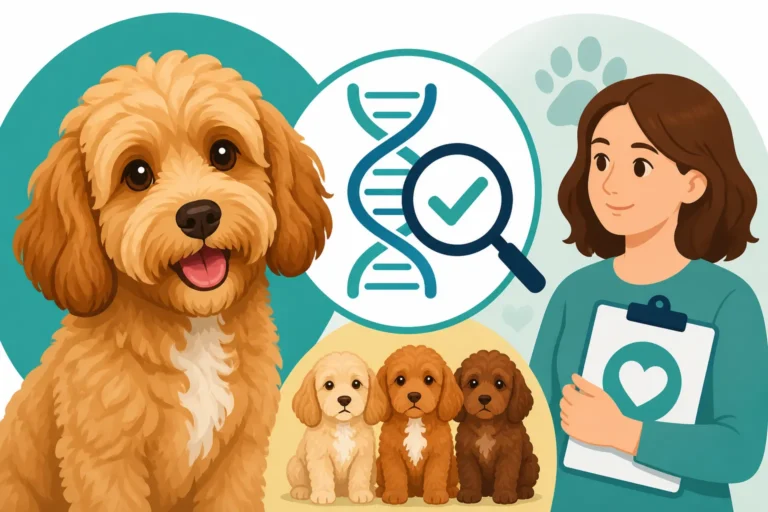
This is precisely why responsible breeders invest in genetic testing. Relying solely on the generation label (F1b) without seeing the actual genetic test results for the parents is akin to buying a car without checking under the hood. You might hope for certain features, but without proof, it's just a hope. Reputable breeders understand this and are transparent. They'll often use services like Paw Print Genetics or similar labs to run a full coat panel, including testing for RSPO2. This test report will clearly show if a dog is FF, Ff, or ff (improper coat or IC). This level of due diligence helps to maintain the integrity of the "guarantee" you're seeking. Even a low-shedding, furnished dog will still need regular grooming. Tools from Chewy or Amazon can be lifesavers for keeping that coat free of mats!
Actionable Steps: How to Verify Your F1b Cockapoo's Coat Potential
You're excited about an F1b Cockapoo, and you're right to be! They genuinely offer a very high probability of that desirable low-shedding, furnished coat. But to move beyond probability to a near-guarantee, you need to be an informed and proactive buyer. Here’s what you can do:
1. Ask for Genetic Test Results
This is, without a doubt, your most powerful tool. A reputable breeder will have genetic test results for both parents of the F1b litter. Specifically, you want to see the results for the RSPO2 gene (the furnishings gene).
- For the F1 Cockapoo parent (the mother of the litter): Look for a result of FF (homozygous furnished) or Ff (heterozygous furnished). Most F1 Cockapoos will be Ff if bred correctly from a purebred Poodle and a typical Cocker Spaniel.
- For the Poodle parent (the father of the litter, the backcross): Look for FF. Purebred Poodles should always be FF for furnishings.
If a breeder cannot or will not provide these genetic test results, it should be a significant red flag. They might not be testing their breeding stock, which opens the door to unexpected coat types and potentially other health issues. Remember, The Five Certificates a Cockapoo Breeder Should Show often include genetic health and coat panels.
2. Observe the F1 Mother
When you visit the breeder (which you absolutely should do!), take a close look at the F1 Cockapoo mother of the litter. Does she clearly have facial furnishings? Look for a prominent beard and eyebrows. While genetics is the ultimate proof, visual confirmation of the mother's coat can offer reassuring evidence that she is indeed furnished. If she has a smooth face like a Cocker Spaniel, despite being called an "F1," then alarm bells should ring, and you should question her genetic background and the breeder's understanding of coat genetics.
3. Understand "Furnished" vs. "Curly" vs. "Non-Shedding"
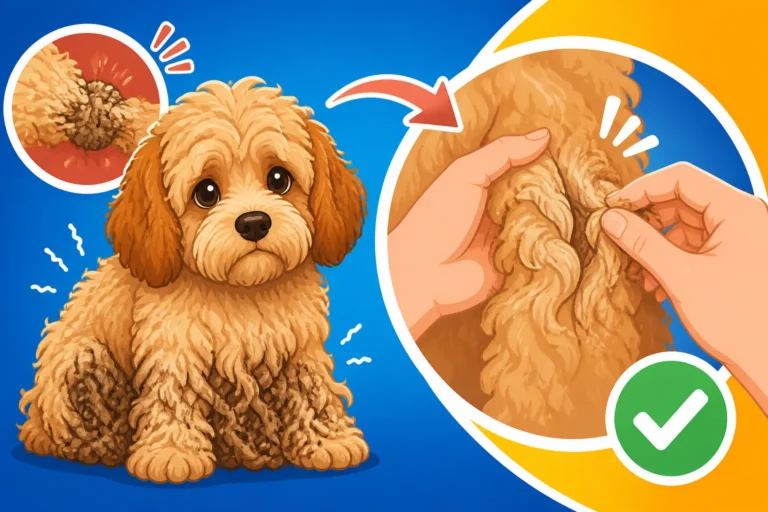
As mentioned, "furnished" means the dog has the facial hair and the genetic predisposition for a low-shedding coat. It doesn't automatically mean they will have tight Poodle curls. Their coat could be wavy, which is still very low-shedding and requires dedicated grooming. It also doesn't mean no shedding; it means low shedding. Managing expectations here is important. Even low-shedding dogs require regular brushing to prevent mats, especially during their coat change around 8-12 months. Finding the right brushes and combs on sites like Amazon can make a huge difference in managing a furnished coat.
4. Ask About the Breeder's Breeding Program and Goals
Engage with the breeder. Ask them about their breeding goals, their understanding of coat genetics, and how they select their breeding pairs. A knowledgeable breeder will be able to explain why they choose an F1b cross and articulate how they ensure the desired coat traits. They should be transparent and happy to discuss these details, not dismissive or vague. This level of transparency also ties into Whether a Breeder Can Guarantee a Cockapoo's Coat – a good breeder can guarantee the genetics for furnishings, even if they can't perfectly predict the exact curl pattern.
By taking these steps, you're not just relying on a generational label; you're actively verifying the genetic foundations that make an F1b Cockapoo so desirable for its low-shedding, furnished coat. This diligent approach will significantly increase your chances of bringing home the Cockapoo of your dreams, a dog with that adorable look and the easy-to-manage coat you hoped for. Remember that even dogs with low-shedding coats need proper care and nutrition, and brands like Ollie can provide high-quality food to support overall coat health. Don't forget to check out What a Cockapoo Coat Panel Actually Reports to understand the full spectrum of coat traits your puppy might inherit.
Disclaimer
This article is for general informational purposes only and does not constitute professional advice. Laws, prices and regulations vary by location and change over time. Consult a qualified professional for guidance on your specific situation.